
Getting into running was pretty straightforward for me. Shoes on, hit the sidewalk, and move forward. But as I started logging more miles along my quiet neighborhood streets and sometimes on trail routes, I quickly realized my technique left me pretty sore. Turns out, running form isn’t just for elite athletes or track teams. It shapes how comfortable the miles feel, lowers the risk of those nagging injuries, and can even make the whole process a bit more fun. I’m sharing everything I’ve learned about running form and technique so anyone starting to take their training seriously can run smarter, not just harder.

Why Running Form Matters More Than You’d Think
It’s easy to overlook the small stuff when pounding pavement, but every piece of how you run works together. Good running form improves efficiency, meaning less wasted energy for every mile. That energy tradeoff makes steady runs and speed workouts feel much less taxing. Over time, better form can lower stress on joints and keep injuries from popping up.
Injuries like shin splints or IT band pain often show up because something’s not quite right in the chain: maybe it’s stride length, or maybe it’s arm swing. I got my first taste of this after a long neighborhood loop kicked off a case of tender knees. That was my wake-up call to pay closer attention to how I moved, not just how far I went.
Basics of Good Running Technique
A solid starting point is focusing on the basics that nearly every coach or running guide recommends. Here’s what helped me iron out most beginner mistakes:
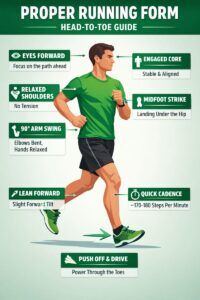
- Posture: Imagine a tall, relaxed stance. Keep the head up, gaze forward (not at your feet), shoulders loose, and core lightly engaged. Hunching forward or leaning back strains everything below.
- Foot Strike: Land softly, ideally midfoot, not crashing down heel first, nor running on tiptoes. A straightforward, natural landing under the body gives more spring and stability.
- Cadence: This means steps per minute. Many everyday runners land closer to 150-160, but bumping the cadence closer to 170–180 helps with a lighter stride. Smaller, quicker steps are often easier on joints.
- Arm Swing: Keep elbows bent at about 90 degrees, swinging them forward and back rather than across the body. Relaxed hands (I sometimes imagine holding chips without crushing them) stop wasted movement.
- Breathing: Steady, even breaths through both nose and mouth keep energy up. I watch for shallow chest breathing and try to use the belly instead when things get tough.
Common Running Form Mistakes (And How I Fixed Them)
After my fair share of aches and awkward videos my kids took of me jogging, I noticed some patterns that held me back. Here’s where I kept messing up and the practical tweaks that worked:
- Overstriding: I used to reach way out with each step, which slowed me down and hurt my knees. Landing with my foot under my hip made a huge difference for both speed and comfort.
- Slouching: Especially on tired days, my upper body would droop. Setting a reminder to check my posture every mile or using visual cues (like mailboxes or trail signs) helped.
- Clenched fists: Tension in hands and arms travels up and down the chain. Reminding myself to keep hands loose (and even shaking them out) prevents tightness and extra fatigue.
- Looking down: On uneven trail, I’d stare straight at my shoes. This threw everything off. I now watch about 15-20 feet ahead, which also helps me spot potholes and roots in enough time to react.
A Simple Guide to Improving Running Form
If you’re hoping to sharpen your technique, a few small habits add up fast:
- Film Yourself: A quick smartphone clip on a driveway or sidewalk can show what needs work. I picked up little things this way that I never noticed while moving.
- Drills: Running skips, high knees, and quick strides (sometimes called strides or accelerations) before a run make good form automatic. They’re my go-to before speedwork or races now.
- Short, Easy Runs: When I notice my form slipping, I cut mileage a bit and run slow, focusing on posture and foot strike instead of pace.
- Strength and Mobility: Weakness or stiffness in hips, glutes, or ankles turns into bad habits during tired miles. I add bodyweight squats, lunges, and simple ankle rolls several times a week.
Practical Tips for Suburban and Trail Runners
Running form isn’t “one size fits all.” My weekday road runs in the neighborhood need different tweaks than the weekends out on the dirt or gravel trail.
Training on Neighborhood Roads
Paved routes make it easy to zone out, but uneven sidewalk slabs, driveway lips, and curbs are part of the package. I try to stay alert and keep posture tall so I can react if I hit a rough patch. Headphones on? I keep volume low enough to hear traffic or cyclists sneaking up behind me.
Occasional Trail Runs
Trails mix things up; rocks, roots, slippery mud, the works. I shorten my stride slightly and focus even more on landing under my body, not way in front. On steeper downhills, bending knees and letting arms come out a bit helps me stay balanced. Trail running might feel slower at first, but it builds strength and coordination that comes in handy back on the streets.
Things Worth Considering Before Changing Your Running Technique
Switching up running form can take time and patience. Here’s what I’ve picked up since getting serious about it:
- Give New Habits Time: My body needed several weeks to adjust every time I tried to change something big, like cadence or foot strike. Expect muscles to get sore in new places and keep the mileage gentle for a bit.
- Don’t Copy Someone Else’s Style: Everyone’s legs, hips, and stride are a little different. Use general guidelines, but don’t force yourself into what doesn’t feel natural. Filming your own run helps you work with what you’ve got.
- Upgrade Slowly: Shoes can play a role, but swapping to a minimalist or zero drop pair overnight is a quick way to get injured if your body isn’t used to it. I gradually mixed in new shoes alongside my trusted models when experimenting.
Pacing and Progression
Form work fits best on easy runs, or by adding a handful of strides after a regular jog. Rushing progress only leads to old habits or injuries creeping back. When in doubt, I check with a local running group or coach, since even an occasional form check-in can go a long way.
Step Up Your Form: More Advanced Technique Tweaks
Once the basics start to feel automatic, a few details help fine-tune performance:
Uphill Running: Lean slightly into the hill from the ankles, not the waist, and keep arm drive brisk but relaxed. Shorter strides keep momentum up and stop you from burning out early.
Downhill Running: Resist the urge to overstride. Let gravity help, but stay light on feet and keep a quick cadence to maintain control.
Breathing Patterns: If runs get tough, syncing breaths with your foot strike (like in for three, out for two steps) can make breathing feel more under control, especially on tempo days.
Mindful Running: Every few minutes, I do a quick form check; posture up tall, elbows back, feet landing quietly. This keeps bad habits from creeping in, especially late in a run.
If you want to take your running further, consider these small but effective adjustments: throw in some uphill strides at the end of an easy run, try running a few steps barefoot on grass to tune in to how your body moves, or link up with a running buddy for some accountability. These subtle tweaks can freshen up your training and keep motivation high.
Gear and Tools That Help Your Technique
You don’t need a high-tech lab to work on form, but a few things make it easy:
- Supportive Shoes: Fit and comfort matter more than flashy features. Frequent runners in suburbia often opt for cushioned shoes with a bit of support, while trail shoes with grippy soles help when things get uneven.
- GPS Watch: Tracking cadence and pace helps you spot trends. Some newer models even estimate “vertical oscillation” or stride length, giving a peek into running mechanics.
- Foam Roller or Massage Ball: Keeping calves, hamstrings, and glutes happy with regular rollouts can solve a ton of form issues caused by muscle tightness.
- Running Apps and Online Resources: Free video guides, form checklists, or audio cues offer easy reminders and encouragement while running solo.
Frequently Asked Questions
Here are a few questions I hear a lot from new runners who want to improve their form:
Q: What’s the fastest way to improve running form?
A: Short, focused drills and film sessions beat running endless miles. Try 10 minutes of technique drills after warming up and review a video clip after every few runs.
Q: Should I completely switch to forefoot or midfoot striking?
A: Not always. While a midfoot strike often feels more comfortable for many, some people naturally strike differently without injury. If your current form works and doesn’t hurt, big changes may not be needed.
Q: Does running form change on hills or trails?
A: Yes. It helps to use shorter steps and a bit more knee lift on rough ground. Focus less on pace, more on balance and control.
Q: How do I know if my form is hurting my running?
A: Ongoing aches or injuries, extra fatigue, or nagging soreness in the same spot are good signs something needs tweaking. Video reviews or a chat with a coach can provide targeted advice.
Final Thoughts
It’s easy to get wrapped up in gear and distance goals, but a little time working on running form pays huge dividends. Better runs, fewer injuries, and maybe even a new appreciation for the feel of a smooth, steady stride are all possible—from your own neighborhood streets. No runner gets everything perfect, but a few practical tweaks and the willingness to keep learning go a long way. Happy running!