
If you’re anything like me, the idea of long runs used to sound totally intimidating. That feeling in my legs when I first started was no joke. The truth is, building endurance gradually is not as mysterious as it seems. I train in a quiet suburban neighborhood and sometimes switch things up with runs on the trails nearby. It’s all about finding a steady approach that helps avoid burnout and injuries, while still seeing progress over time. Here’s how I’ve pieced together the habits and strategies that work for everyday folks getting serious about their running routine.

Why Building Endurance Gradually Matters
One thing I learned early is that trying to do too much too soon doesn’t just leave you feeling wiped out; it can set you back with nagging injuries. Pushing hard for quick gains usually leads to sore muscles, stress fractures, or just a feeling of being run down. It feels way better finishing a run knowing you could have gone a little further, rather than dragging your feet and dreading your next outing.
Most running coaches and fitness pros agree small, consistent steps translate into steady progress. The American College of Sports Medicine suggests bumping up your weekly mileage by no more than 10% per week. This makes sense for suburban runners like me who are juggling family, work, and everything in between. Building up gradually gives your body (and mind) time to adapt, making those long-term gains realistic. Slow and steady gives you the best shot at sticking with running for years, instead of just weeks or months.
Getting Started with Endurance Training
Starting out is mostly about routine and mindset. If you’re a beginner runner or just not used to longer runs, your first goal is to get comfortable lacing up and heading out several days a week. Here are a few basics I leaned on during the early days:
- Set a Base: Most guides recommend starting with three to four runs per week, keeping most of them short and at a comfortable pace. Gradually, you’ll get stronger and find your weekly rhythm.
- Find Your Comfortable Pace: For me, “conversational pace” meant I could easily chat with a friend or listen to a podcast without gasping for air. This sets up your body for aerobic gains without crushing your motivation.
- Track Your Runs: Apps like Strava or Garmin Connect are pretty handy for logging time, distance, and pace. It’s fun (and motivating) to see progress charted over the weeks.
- Mix Up the Terrain: Suburban streets are convenient, but adding a trail run here and there always helped me avoid getting bored and worked my legs in new ways.
Step-by-Step Guide to Increasing Endurance
My endurance training really started to click when I broke it down into simple, manageable stages. Here’s what my own weekly buildup tends to look like:
- Choose a Realistic Starting Point: Start with a distance you know you can finish comfortably a couple of times per week.
- Add a Little Each Week: Bump up your longest run by half a mile or so every week. If you’re at two miles, try two and a half miles next week. Following that 10% rule is a safe bet.
- Alternate Easy and Long Runs: Most of my weeks now include one “long run,” a day or two of easy paced runs, and one rest day. Sometimes more, depending on how my body feels.
- Include Rest and Recovery: Recovery days are just as important as running days. A rest day might be a walk through the neighborhood or stretching on the back patio, both of which allow muscles to repair and come back stronger.
- Check In on Your Progress: Every few weeks, notice how runs feel. Maybe jot down quick notes on soreness, mood, or motivation. It’s cool to look back later and notice what’s improved.

Challenges When Building Endurance (and How to Deal with Them)
The path to better endurance is rarely a straight line; there are usually a few hiccups or plateaus. I’ve bumped into all sorts of speedbumps, but these are the most common ones and how I handle them:
- Fatigue: Feeling worn out can be normal, but persistent exhaustion usually means I need a little extra sleep, better snacks, or a couple of lighter training days.
- Minor Injuries: Shin splints and sore knees popped up when I first started running more often. Swapping out my shoes for a fresh pair and using a foam roller on tight muscles made a huge difference.
- Losing Motivation: Sometimes I just don’t want to run. That’s usually when I’ll invite a neighbor for a walk or change my route to a local park. Small changes keep things interesting and remind me why I started in the first place.
- Weather and External Stuff: Rainy and cold days are pretty common in my area, so having an indoor backup or doing a micro workout (like jumping jacks or yoga) helps keep the habit alive.
Dealing with Fatigue
To avoid getting totally drained or burning out, I stick to an easy pace on most runs and make rest a real priority. Sometimes, a couple days off does more for my stamina than pushing through fatigue. I also found that drinking more water, having a banana after long runs, and making sure I get enough sleep really helps my body handle more running. Keeping some flexibility in my schedule means I’m less likely to overdo it and more likely to stick with it for the long haul.
Managing Minor Injuries
After spraining my ankle once on a trail, I got pretty careful about keeping my shoes in good shape and paying attention to any aches that stick around. Rotating between road and softer trail surfaces seemed to give my legs a break, and regular calf stretches (usually after jogging) definitely kept shin splints away. Cross training with biking or swimming on rest days can also relieve stress on your joints and make your running even stronger over time.
Staying Accountable
Accountability is underrated. Letting my family know my running plans or joining a virtual group chat with friends working on their own fitness goals gave me a reason to show up, even on sluggish days. It’s a small thing, but sharing wins (like new distance records) makes the extra effort feel noticed and worth it. Even just texting a friend after a workout keeps me consistent and gives me another reason to keep striving forward.
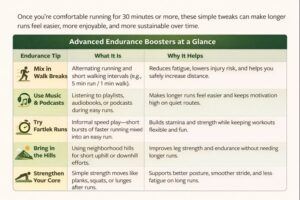
Advanced Tips and Extra Endurance Boosters
Once I felt comfy with a steady jog for half an hour or more, I wanted to see what else I could do to make those longer runs feel easier, and even a little more fun. My favorite tweaks so far:
Mix in Walk Breaks: The run/walk method (like five minutes running, one minute walking) is super useful if you’re bumping up your mileage or tackling a new loop around your block.
Use Music and Podcasts: Lining up a new playlist or a favorite episode makes those slower runs way easier to finish, especially on the quieter suburban side streets.
Try Fartlek Runs: Fartlek means “speed play” in Swedish, and it’s basically mixing up the pace for short bits. Run to the next mailbox, then slow down, then pick up the pace again. These mini speed bursts keep things interesting and build both stamina and strength.
Bring in the Hills: If you’ve got any kind of hill in your neighborhood, using it for short intervals (walk up, run down or vice versa) builds strength that pays off big time on longer runs.
Strengthen Your Core: Adding in a couple of planks, squats, or lunges after a run can make your core stronger and your stride smoother. A sturdy core helps prevent fatigue and maintain good posture, especially on longer sessions.
What Kind of Gear Actually Helps?
I’ll be honest: I used to think running gear was mostly hype, but a couple choices have really helped me stick with my habit. If you’re running suburban streets or hopping on easy trails, here are the main items that helped me out:
- Supportive Shoes: Swapping out running shoes every 300 to 400 miles kept my legs feeling good and reduced nagging aches.
- Tech Shirts and Socks: Light, sweat wicking shirts and decent socks make a huge difference for comfort, especially in warmer weather. No one likes blisters or chafing holding them back.
- Reflective Gear: Early mornings or dusk runs are common for me, so a little extra visibility makes me comfortable running quiet suburban loops.
- Handheld Water Bottle: For anything longer than 45 minutes, carrying a small water bottle helps prevent sluggishness, especially when I end my runs on trails further from home.
- Optional Accessories: A running belt for keys, a hat for sunny days, or a pair of gloves for chilly mornings. Simple extras like these help keep you comfortable so you can focus on your goals.
Frequently Asked Questions
Here are a few questions that popped up when I first got serious about running and building endurance:
How do I know if I’m progressing?
Tracking time, distance, and how you feel after each run is lots more useful than focusing on exact speed every time. If weekly runs feel easier or you’re going further without feeling wiped, that’s a solid sign you’re moving forward. Progress isn’t always fast or obvious, but it adds up.
What if I hit a plateau?
Plateaus are normal and can even mean your body is adjusting. Sometimes just mixing up your route, adding some speed bursts or extra rest can shake things loose again. Be patient—your body is still getting stronger.
How often should I rest?
I found that at least one full rest day a week is a good idea, with some flexibility if you feel extra tired. Your body will let you know when it needs downtime, and it’s totally okay to listen. Muscle soreness after a new distance is normal, but pain that sticks around should be a hint to take it easy or check in with a physical therapist.
Final Thoughts
Building endurance takes real patience, but every steady mile adds up. It’s about logging those regular, consistent runs and letting your body gradually adapt. Safe progress, smart recovery, and a routine you enjoy make running feel like something you want to keep coming back to. No matter where you lace up for your next jog, remember that each run you finish puts you that much further along your fitness adventure. Whether it’s the quiet suburban streets or a winding trail, your endurance story is built one run at a time.